

System Definition Sprint
Define the requirement, users, boundaries, acceptance criteria and evidence before a large build.

We design and engineer custom applications, AI-enabled workflows, integrations, operational consoles and connected systems around the real work of your organisation—not around the limitations of a preselected platform.

Begin with the decision that must become possible—not with the largest possible scope.
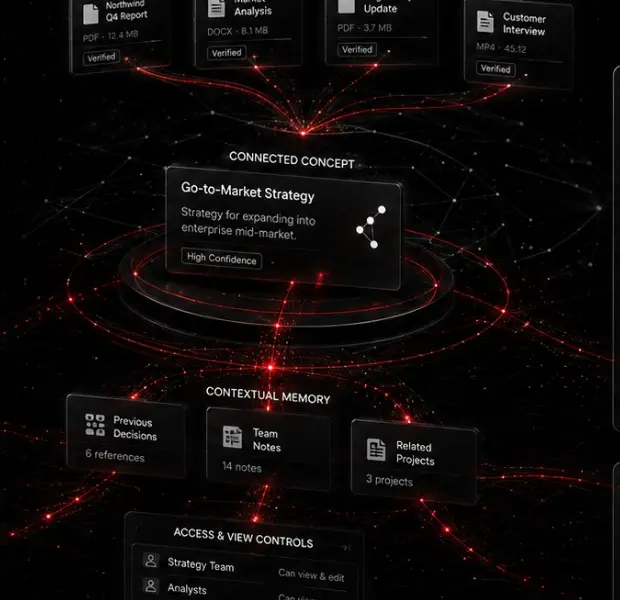
The fingerprint-and-module direction becomes a system boundary around one problem, one operating context and one accountable delivery path. It is not a biometric-product claim or a live system screenshot.
The warning signs are familiar: information is re-entered by hand, teams maintain parallel spreadsheets, approvals disappear into inboxes, critical context lives with one employee, customers experience a fragmented journey or a unique business model is forced through software designed for somebody else.
Custom technology is justified when the cost of adapting the organisation has become greater than the value of adapting the system.
Custom web, desktop and mobile applications.
Internal operating systems and role-based workspaces.
Client, partner, creator and supplier portals.
Workflow, approval and case-management systems.
AI-assisted research, drafting, classification and decision support.
API, data and identity integrations across existing systems.
Operational dashboards and command interfaces.
Document, media and asset processing pipelines.
Prototypes that test a new product, service or operating model.
Repetitive handoffs become one traceable workflow.
Decisions carry the information and approval context needed to understand them.
Teams stop rebuilding the same knowledge in multiple tools.
A unique method becomes repeatable without being flattened into a generic template.
Customers, partners and staff interact through a coherent experience.
New AI capability enters defined data and authority boundaries.
The organisation gains a platform it can continue instead of another temporary workaround.
The operating problem and why existing products are insufficient.
The people who use, own, approve and maintain the process.
Existing systems, data sources, documents, interfaces and dependencies.
Non-negotiable privacy, security, legal, compatibility, time or ownership constraints.
Known failure conditions and the consequences of getting the system wrong.
Controlled requirements and acceptance register.
User, role and operating-context map.
System, data and integration architecture.
Interface flows and prototype where required.
Working application or system components within the agreed scope.
Test, release, recovery and handover evidence.
No model, provider or platform is selected before the system boundary is understood.
Customer and third-party data are used only within the authorised project purpose.
Access, administrative roles and external actions are deliberately configured.
A demonstration is not treated as production acceptance.
Material scope changes are recorded rather than absorbed invisibly.
Release requires defined ownership, recovery and decision authority.
Custom Technology is designed for organisations with a meaningful requirement, a responsible project sponsor and a willingness to make the operating reality visible. It is particularly valuable where the capability can become strategic infrastructure rather than a disposable campaign asset.
When the decisive operating requirement cannot be reached credibly through configuration, integration or process change alone—and the capability has durable strategic value.
Yes. Existing applications, data, identities, interfaces and constraints are mapped before architecture so replacement is not assumed where integration is more credible.
Ownership, licensing, source access, third-party components, hosting, handover and maintenance are defined contractually before dependency grows.
Show us the work, the constraint and the outcome that standard software cannot reach. We will determine whether the requirement justifies a custom system and what the smallest credible first build should contain.